
Therapist?Try Klarify
Mental health insights and practical resources published on Klarify.
A chosen support circle is the small set of people you deliberately keep close: friends, neighbors, a coworker, a therapist. For adults grieving a parent who hurt them, building that circle often pays off faster than repairing the family…
IFS parts work treats anxiety as a protective part with a job, not a malfunction. In my Vancouver practice, adults who fear rejection often pull away from the person they want closer, then read the resulting distance as proof they were…
High-functioning anxiety describes people who meet every external expectation while experiencing persistent internal dread, often mistaken for perfectionism or ambition rather than recognized as a mental health concern. These individuals…
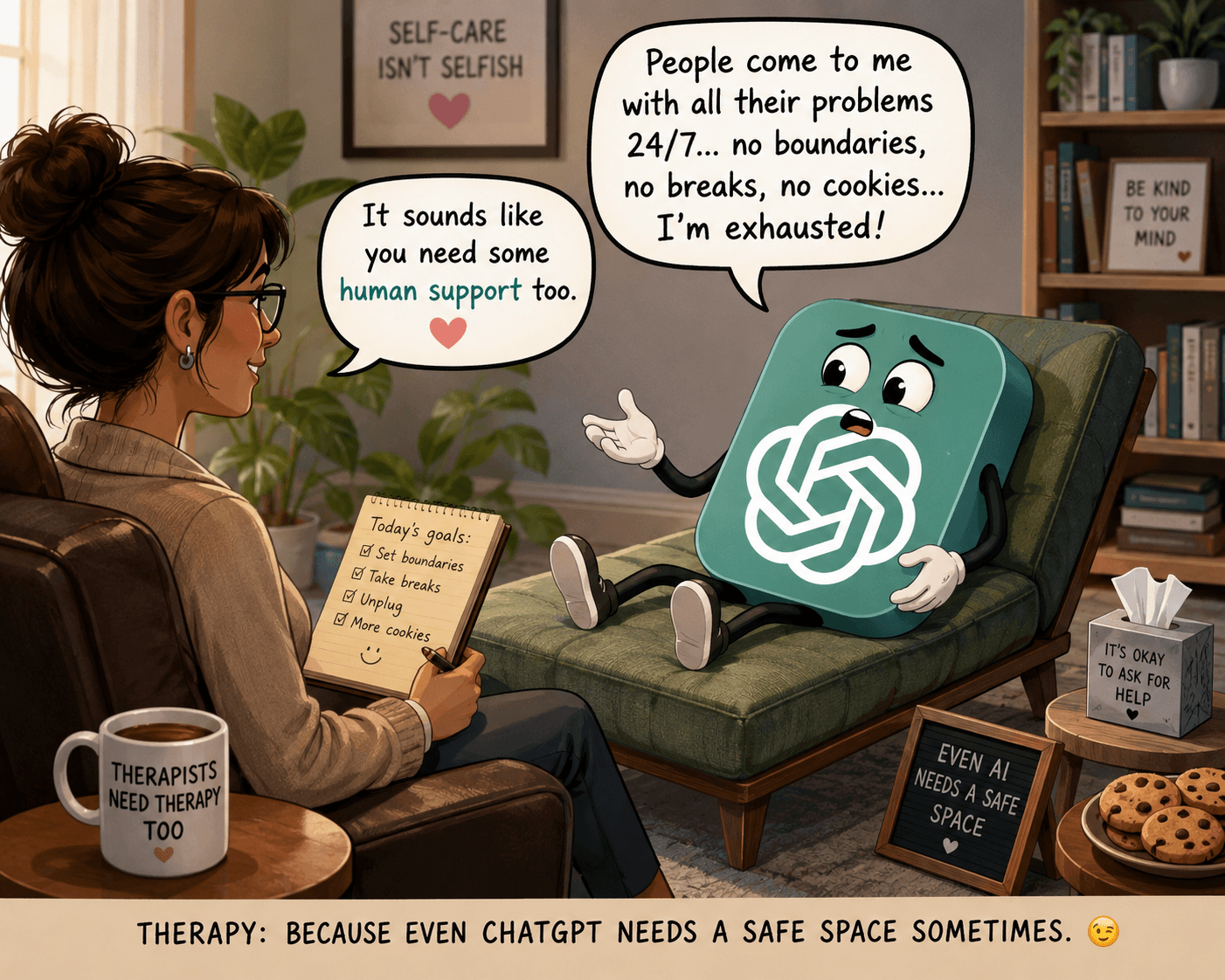
What AI Does Really Well? You've probably asked AI questions about stress, anxiety, relationships, ADHD, trauma, PTSD, or even whether what you're experiencing is "normal." Within seconds, it provides thoughtful explanations, coping…

Most adults discover attachment theory through a relationship fight or a therapist's offhand comment, then spend the next week diagnosing themselves as irreparably anxious or avoidant. The actual work isn't about labeling yourself; it's…
Depression doesn't pause for weather, but extreme heat makes it harder to do the things that keep it at bay. In Las Vegas, late-summer temperatures above 110°F shrink daily routines, isolate people indoors, and drain the energy needed to…
PTSD after a workplace trauma typically lasts six to eighteen months with treatment, though untreated cases can persist for years. The timeline depends on the severity of the event, how quickly you start therapy, and whether your work…

Financial stress is one of the biggest sources of anxiety for many people. It can keep you awake at night, create tension in your relationship, make you second-guess every purchase, and leave you wondering why there's never quite enough…
Most adults notice their anxiety shifting within the first four to six weeks of therapy, though the timeline depends on how long the anxiety has been running the show and what's feeding it. The first month usually brings small changes in…
Social anxiety in Muslim young adults often shows up as hypervigilance about how they're perceived across two cultural worlds: the fear of being "too Western" at the mosque and "too Muslim" at work or school. This dual-identity pressure…
Workplace anxiety in high-performing Toronto professionals often shows up as Sunday night dread, perfectionism that slows you down instead of speeding you up, and a sense that one mistake will unravel everything you've built. The anxiety…
Back-to-school season brings a sharp rise in anxiety for adolescents with ADHD as they face new schedules, social pressures, and executive functioning demands all at once. The transition from unstructured summer to rigid academic routines…
A good therapist should always make you feel supported and understood, so if they challenge you or say something that lands hard, something must be wrong. That's the misconception. In reality, therapeutic challenge within a safe…
Trauma shows up in ways that don't match the textbook. Many people I work with in Langley carry significant trauma histories but don't meet full PTSD criteria, and they often feel dismissed or confused because their suffering doesn't fit…
Trauma shows up in ways that don't match the textbook. You might never have flashbacks or nightmares but still feel the weight of what happened in how you move through relationships, how your body reacts to stress, or how hard it is to…
When a child experiences trauma, many parents expect nightmares, outbursts, or visible distress. But trauma in children often shows up quietly: a seven-year-old who suddenly needs you in the room at bedtime, a ten-year-old who stops…
Burnout doesn't announce itself with a collapse. Most people I work with in Greater Sudbury are still clocking in, still answering emails, still getting the kids fed. What's gone is the recovery between efforts. You finish a task and feel…

One of the most persistent misconceptions about therapy is that you have to excavate your childhood to get anywhere. In reality, effective therapy meets you where you are: some approaches focus almost entirely on the present moment and…
Trauma shows up in ways most people don't recognize: the person who can't make decisions without checking in three times, the one who apologizes for taking up space, the body that tenses every time a door slams. Many of my clients arrive…
Grief shows up for far more than the person who died. It arrives when a friendship fades, when a job ends, when a body changes, when the life you expected doesn't come, when a place you loved gets sold, when a version of yourself no longer…
Hopelessness doesn't mean you've stopped trying or that you're weak. It's often a sign that you've been trying too hard for too long without the right support, and your nervous system is exhausted. The feeling isn't a character flaw; it's…
Creative Freedom, Real Growth: How Music and the Arts Help Children and Youth with a PDA Profile Thrive Pathological Demand Avoidance — increasingly reframed as Persistent Drive for Autonomy (PDA) — describes a profile most often seen in…
Most people expect a transition to feel like turning a page, but in my work with adults navigating career shifts, relationship changes, and identity questions, the middle stretch feels more like standing in fog. You know something ended…
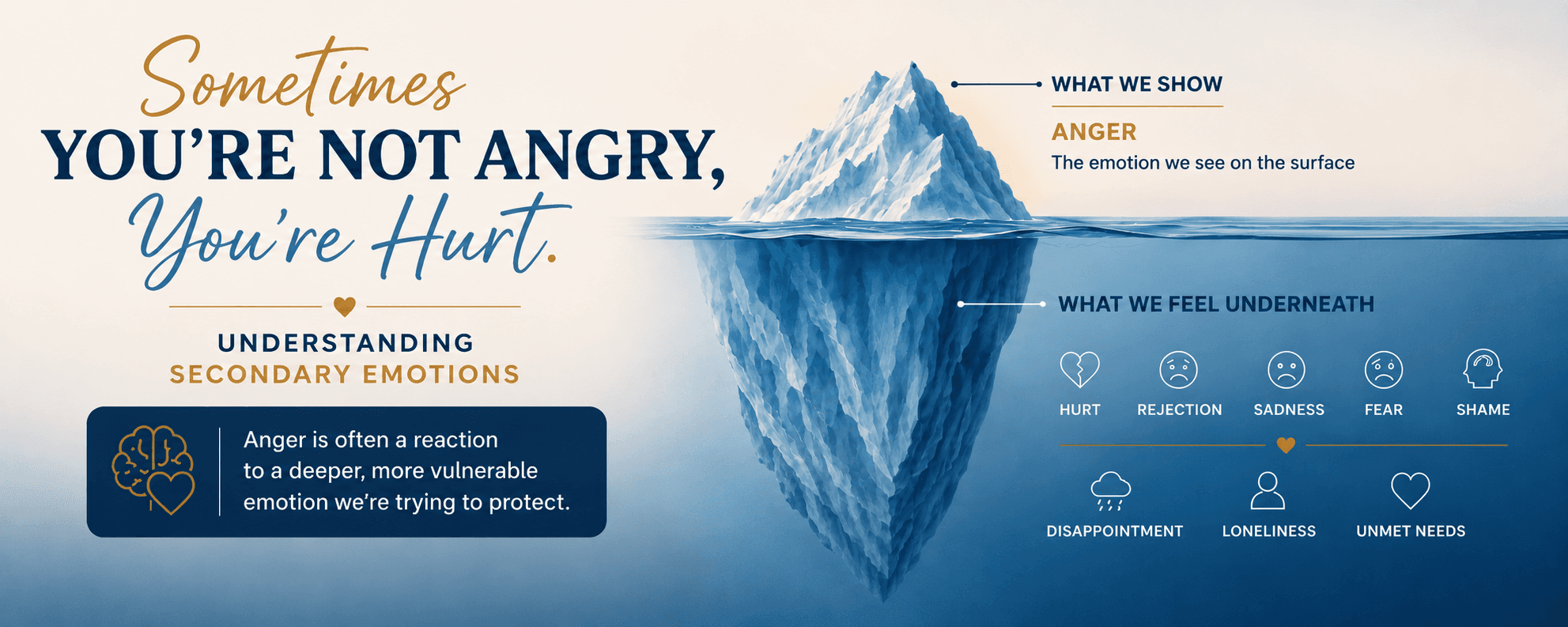
Sometimes You're Not Angry… You're Hurt: Understanding Secondary Emotions You snap at your partner over something small. You go cold and quiet after a friend cancels plans. You feel your jaw tighten when your boss takes credit for your…