
Therapist?Try Klarify
Mental health insights and practical resources published on Klarify.

When someone tells me they've been masking for years and "doing fine," I've learned to listen for what that phrase actually means. Masking—suppressing neurodivergent traits, scripting social responses, performing neurotypical…

When you're anxious, a breathing exercise might settle you right down. When you're numb or shut down, that same breathing exercise can feel pointless or even make things worse. The reason is simple: different nervous system states need…

Working with neurodivergent adults in North York has shown me that self-blame isn't a character flaw but an adaptive response learned early, often before diagnosis. The people I sit with carry a chronic belief that they are the problem,…
ADHD is not a deficit of attention but a difficulty directing it, especially toward tasks that feel unrewarding or abstract. The disorder affects executive function, emotional regulation, working memory, and impulse control, all of which…
Adults with ADHD often develop sophisticated masking strategies over decades, presenting as high-functioning while privately struggling with executive function, emotional regulation, and exhaustion from constant compensation. The gap…

Why Trying to Neutralize Intrusive Thoughts Keeps OCD Going People with OCD often notice their symptoms spike hardest when they are trying hardest to stop them. That is not bad luck. It is part of how the disorder sustains itself. The…

Compassionate Inquiry traces the moment a trigger first taught your nervous system to protect you, then helps you integrate that awareness so the old pattern loosens its grip. The approach gently uncovers where a childhood adaptation, once…
Anxiety shows up as physical sensation before it becomes a thought you can name. Most people I work with describe chest tightness, shallow breathing, or stomach tension minutes or even hours before they can articulate what they're anxious…
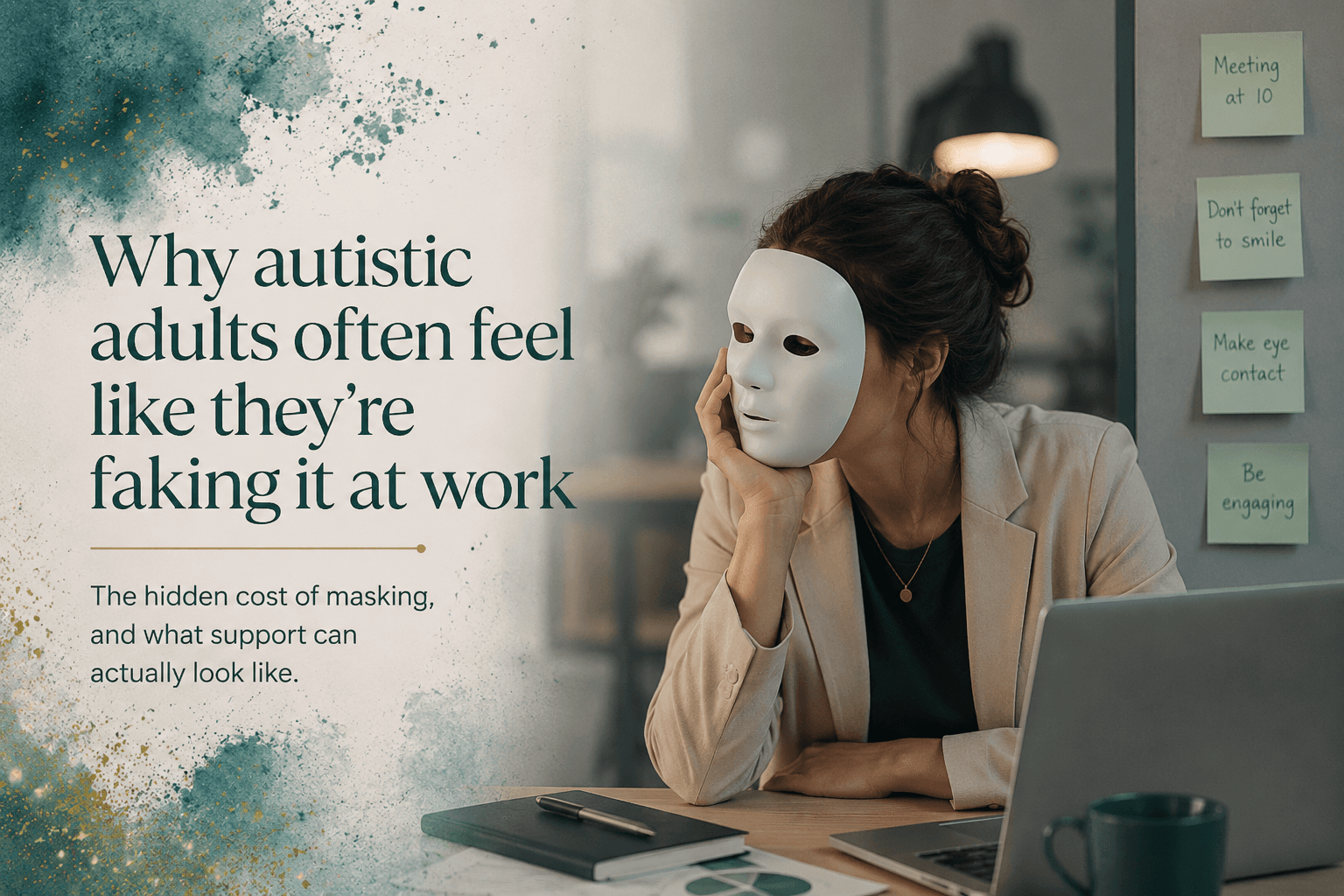
Many autistic adults I work with describe a persistent fear that colleagues will discover they're "performing" neurotypical behavior rather than being authentic. This isn't impostor syndrome in the usual sense; it's the exhausting…
Most people who end up in therapy spent years being the person everyone else leaned on. They're the friend who answers the 2 a.m. call, the sibling who manages the family crisis, the colleague who stays late to cover someone else's work.…
Most people who experience trauma don't develop full PTSD, but that doesn't mean they're fine. Over 70% of us will face at least one traumatic event in our lifetime, yet only about 10% go on to meet diagnostic criteria for post-traumatic…