
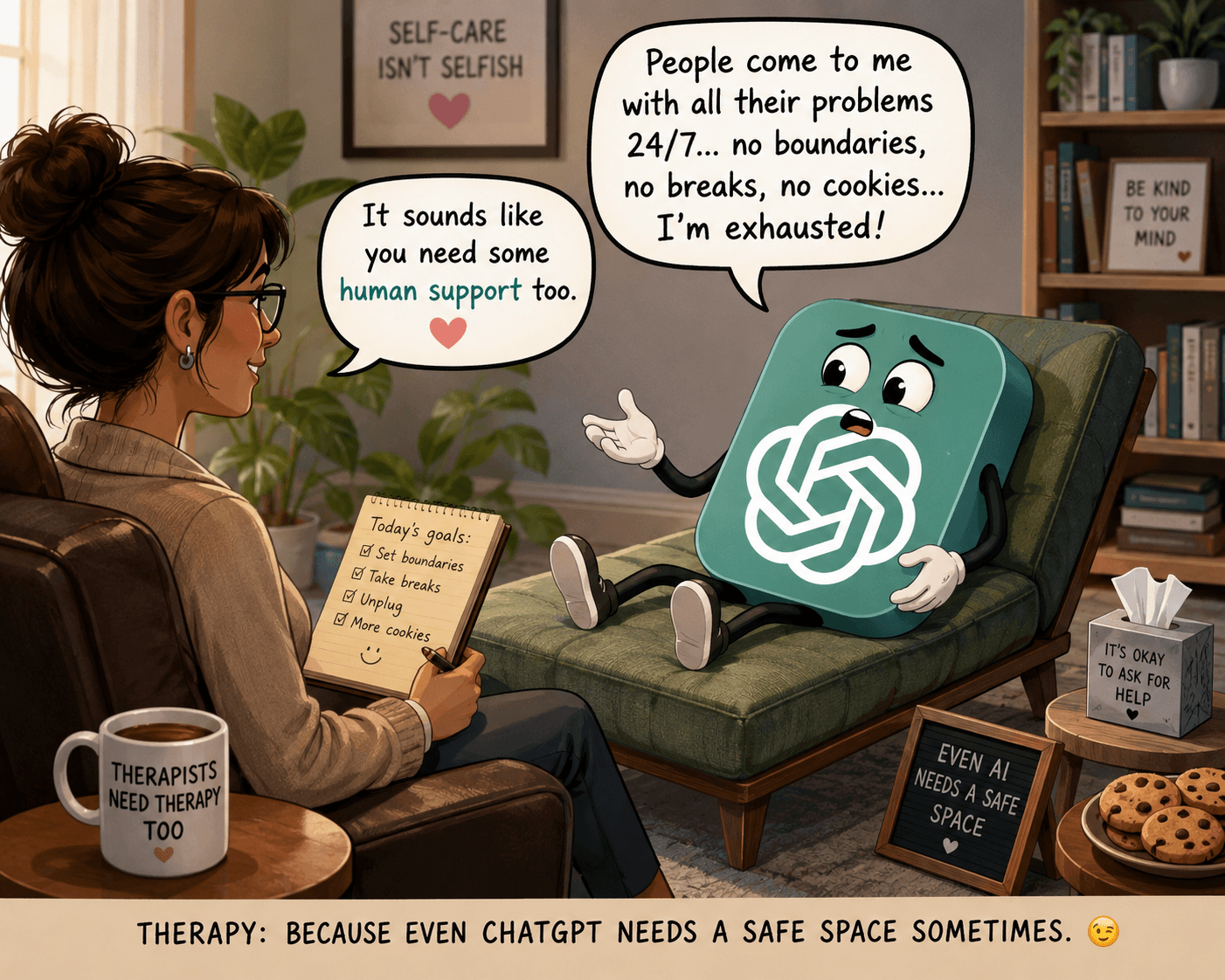
Can Chat GPT/ AI Replace Therapy? Why Human Connection Still Matters
What AI Does Really Well?
You've probably asked AI questions about stress, anxiety, relationships, ADHD, trauma, PTSD, or even whether what you're experiencing is "normal." Within seconds, it provides thoughtful explanations, coping strategies, and practical suggestions. It's available 24/7, doesn't judge you, and often feels surprisingly supportive. That naturally leads to an important question: "If AI can help me this much, do I really need a therapist?" The answer isn't that one is better than the other. In fact, they work remarkably well together. But they serve very different purposes.
As a Registered Psychologist and Certified EMDR therapist, I often meet people who have spent years reading books, listening to podcasts, and using AI to understand themselves. That knowledge is valuable—but healing usually begins when insight is paired with evidence-based therapy and a safe therapeutic relationship. Let us dive into the reasons.
Where AI Has Limits?
Although AI can provide information and guidance, it cannot truly understand your lived experience. It doesn't know what it feels like to carry years of trauma, navigate complicated relationships, or experience the physical sensations that accompany anxiety or grief. Healing often happens through being understood by another human being.
AI Can't Replace Clinical Judgment. A therapist can recognize warning signs, assess risk, collaborate with other healthcare providers when needed, and help create an appropriate treatment plan.
Why Information Alone Doesn't Create Healing?
Many people know why they feel anxious. They know their childhood affected them. They know they should set healthier boundaries. Yet they continue to feel stuck. That's because insight alone doesn't automatically change deeply learned emotional and nervous system responses.
Imagine watching hundreds of YouTube videos about swimming. You might understand every stroke perfectly. But when you jump into the water, your body still has to learn. Emotional healing works the same way. Reading about trauma isn't the same as processing trauma. Knowing about anxiety isn't the same as retraining your nervous system. Healing often requires practicing new ways of thinking, feeling, and responding—with someone who can guide, support, and adjust the process based on your unique needs.
Why Therapy Is Different?
No two people experience anxiety, depression, ADHD, or trauma in exactly the same way.
A therapist notices subtle patterns that may not appear in words alone:
emotional shifts
body language
avoidance
inconsistencies
changes across multiple sessions
strengths you may overlook
recognize patterns you may not see yourself
understand how past experiences influence your present
process painful emotions safely
identify blind spots
develop healthier ways of relating to yourself and others
work through trauma rather than simply learning about it
Your treatment isn't simply based on symptoms—it's tailored to your personality, goals, history, culture, relationships, and life circumstances.
When Should You Consider Seeing a Therapist?
Evidence-based therapies such as EMDR, Cognitive Processing Therapy (CPT), trauma-focused CBT, or prolonged exposure involve careful assessment, pacing, and monitoring. Attempting trauma processing without appropriate support can sometimes feel overwhelming. A trained therapist helps ensure that the work happens at a pace your nervous system can tolerate.
AI and Therapy Work Beautifully Together
This doesn't have to be an either-or decision.
Many people use AI between therapy sessions to:
summarize what they learned
practice coping skills
generate journal prompts
organize difficult thoughts
prepare topics for their next appointment
reinforce skills learned in therapy
Think of AI as a helpful companion—not a replacement for human connection.
The Human Element Matters
At its heart, therapy is about being seen, heard, and understood. It's about having someone who remembers your story, notices your progress, gently challenges you when needed, and celebrates your growth with you. Technology can provide information. Healing often happens in relationship.
Final Thoughts
If Chat GPT has helped you better understand yourself, that's wonderful. It can be a powerful resource for learning, reflection, and day-to-day emotional support.
But if you're feeling stuck, overwhelmed, carrying unresolved trauma, or wanting lasting change, therapy offers something AI cannot: a compassionate, collaborative relationship grounded in professional expertise and tailored to your unique experiences.
You don't have to choose one or the other. The most effective approach may be using both—letting technology support your learning while working with a therapist to help you heal, grow, and move toward the life you want.
"AI can provide information.
Therapy provides transformation.
One helps you understand your mind.
The other helps you change your life.
Together, they can be a powerful combination.”
Can AI replace therapy?
No.AI can provide information, self-reflection prompts, and coping ideas, but it cannot replace the individualized assessment, emotional connection, and evidence-based treatment provided by a licensed therapist.
Can I use AI during therapy?
Absolutely. Many people use AI to summarize sessions, organize thoughts, journal between appointments, and practice skills learned in therapy.
When should I see a therapist instead of using AI?
If you're experiencing persistent anxiety, depression, trauma, relationship difficulties, grief, or emotional distress that's interfering with daily life, working with a therapist can provide personalized support and evidence-based treatment.
When Is Therapy Worth Considering?
You might benefit from working with a therapist if:
anxiety is affecting your daily life
you're feeling emotionally overwhelmed
you're stuck in the same relationship patterns
past trauma still affects your present
you've tried self-help but nothing seems to stick
you want lasting change instead of temporary relief
You Don't Have to Navigate Alone
If you are feeling overwhelmed, struggling with anxiety, trauma, ADHD, depression, or major life changes, you don't have to figure everything out alone with AI. If you're an adult in Alberta, Nova Scotia, or New Brunswick and ready to take that first step, you can reach out today for your complimentary 15-minute phone consultation with Dr. Manju Mathew. She is a Registered Psychologist and certified EMDR therapist trained in Cognitive Processing Therapy (CPT), Prolonged Exposure (PE), CBT, ACT, and other evidence-based approaches. She is here to walk beside you every step of the way, bringing her expertise, warmth, and genuine care to every session.