
Therapist?Try Klarify
Mental health insights and practical resources published on Klarify.
Premarital counselling for Muslim couples in Ajax works best when it stops rehearsing agreement and starts rehearsing repair. Most couples I sit with do not come apart over big incompatibilities. They come apart over how an argument ends.…
Porn addiction in Muslim men is usually a stress-regulation problem wearing religious clothing. In my Ajax practice, the urges cluster around identifiable pressures: sleepless nights, unstructured hours, conflict at home, loneliness after…
IFS parts work treats anxiety as a protective part with a job, not a malfunction. In my Vancouver practice, adults who fear rejection often pull away from the person they want closer, then read the resulting distance as proof they were…
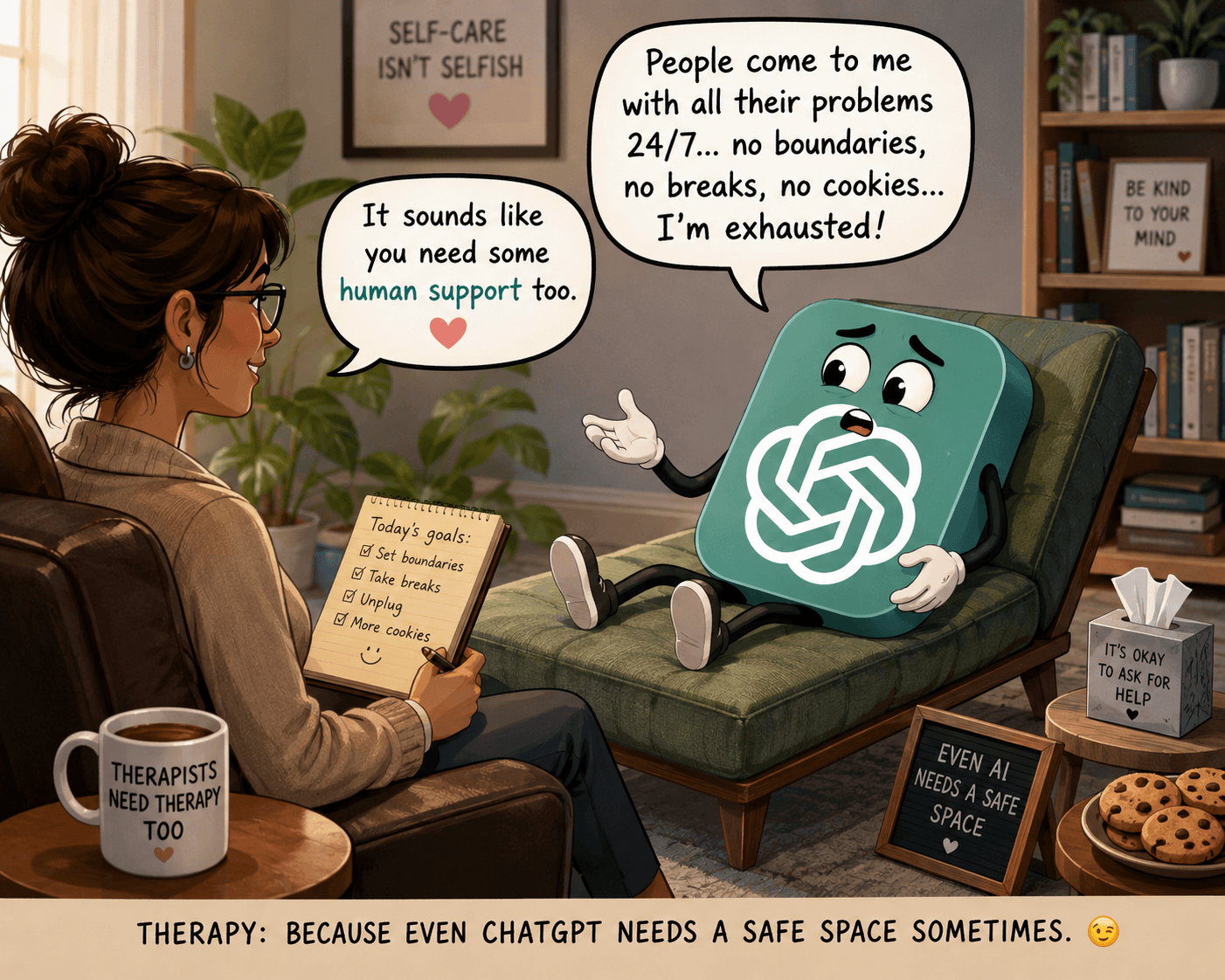
What AI Does Really Well? You've probably asked AI questions about stress, anxiety, relationships, ADHD, trauma, PTSD, or even whether what you're experiencing is "normal." Within seconds, it provides thoughtful explanations, coping…

Most adults discover attachment theory through a relationship fight or a therapist's offhand comment, then spend the next week diagnosing themselves as irreparably anxious or avoidant. The actual work isn't about labeling yourself; it's…
PTSD after a workplace trauma typically lasts six to eighteen months with treatment, though untreated cases can persist for years. The timeline depends on the severity of the event, how quickly you start therapy, and whether your work…
A good therapist should always make you feel supported and understood, so if they challenge you or say something that lands hard, something must be wrong. That's the misconception. In reality, therapeutic challenge within a safe…
Trauma shows up in ways that don't match the textbook. Many people I work with in Langley carry significant trauma histories but don't meet full PTSD criteria, and they often feel dismissed or confused because their suffering doesn't fit…
Trauma shows up in ways that don't match the textbook. You might never have flashbacks or nightmares but still feel the weight of what happened in how you move through relationships, how your body reacts to stress, or how hard it is to…
When a child experiences trauma, many parents expect nightmares, outbursts, or visible distress. But trauma in children often shows up quietly: a seven-year-old who suddenly needs you in the room at bedtime, a ten-year-old who stops…
Burnout doesn't announce itself with a collapse. Most people I work with in Greater Sudbury are still clocking in, still answering emails, still getting the kids fed. What's gone is the recovery between efforts. You finish a task and feel…

One of the most persistent misconceptions about therapy is that you have to excavate your childhood to get anywhere. In reality, effective therapy meets you where you are: some approaches focus almost entirely on the present moment and…
Trauma shows up in ways most people don't recognize: the person who can't make decisions without checking in three times, the one who apologizes for taking up space, the body that tenses every time a door slams. Many of my clients arrive…
Grief shows up for far more than the person who died. It arrives when a friendship fades, when a job ends, when a body changes, when the life you expected doesn't come, when a place you loved gets sold, when a version of yourself no longer…
Hopelessness doesn't mean you've stopped trying or that you're weak. It's often a sign that you've been trying too hard for too long without the right support, and your nervous system is exhausted. The feeling isn't a character flaw; it's…
Creative Freedom, Real Growth: How Music and the Arts Help Children and Youth with a PDA Profile Thrive Pathological Demand Avoidance — increasingly reframed as Persistent Drive for Autonomy (PDA) — describes a profile most often seen in…
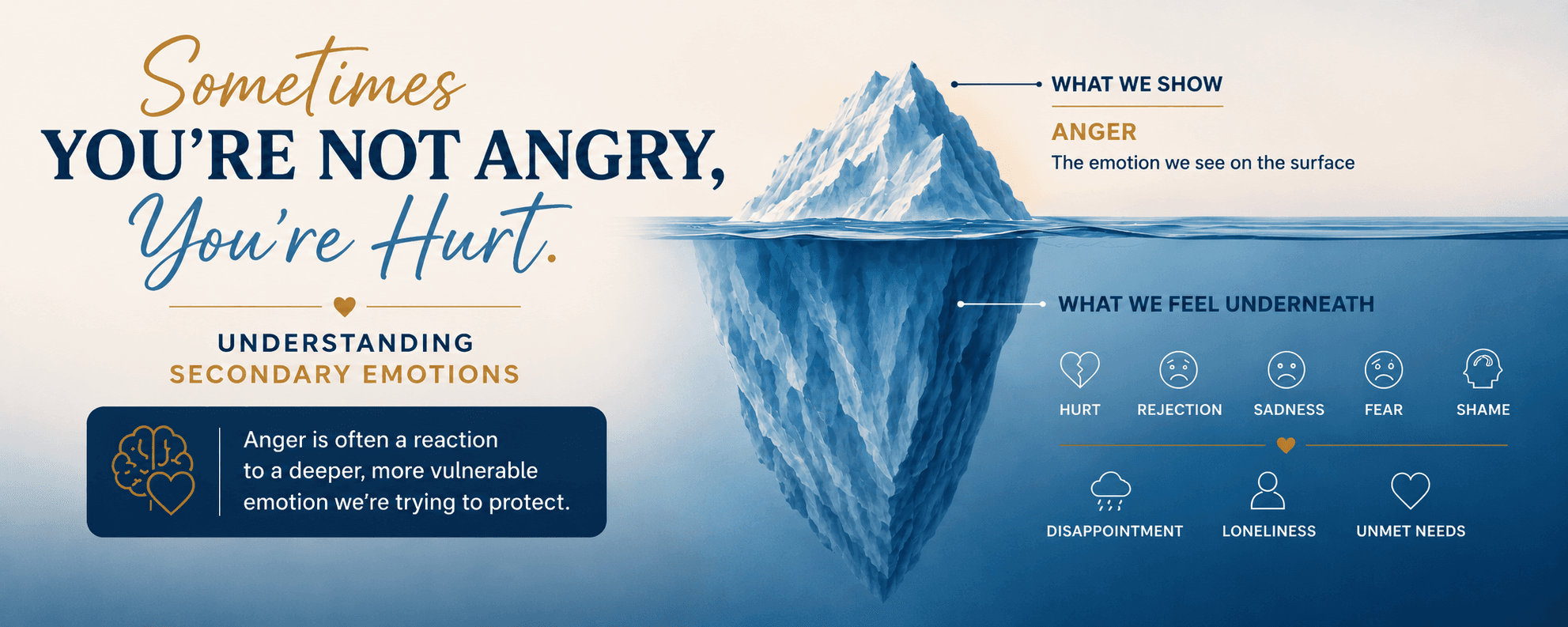
Sometimes You're Not Angry… You're Hurt: Understanding Secondary Emotions You snap at your partner over something small. You go cold and quiet after a friend cancels plans. You feel your jaw tighten when your boss takes credit for your…
Over 70% of people experience at least one traumatic event in their lifetime, but most keep showing up to their jobs, their families, their routines. Trauma doesn't always announce itself with flashbacks or panic attacks. Often it hides in…
Trauma doesn't just change how you remember the past—it rewires how you experience the present. Many people who've survived trauma describe feeling stuck in a moment that's already over, or living in a state of constant anticipation,…
Trauma doesn't follow a timeline. Many people assume PTSD symptoms appear immediately after a traumatic event and fade with time, but in my work with veterans, first responders, and adults processing childhood experiences, I often see…

You Have More Rights in Therapy Than You Think Walking into a therapist's office — or logging on for a virtual session — can feel vulnerable. You might wonder: Am I allowed to push back? Can I change direction? What if this isn't working?…

By Lynn Northrop, Ph.D. | Licensed Psychologist in CA, CT, FL Guess what. I am a psychologist and I’ve talked to an AI about my own life. Not as a research experiment. Not to test the technology. Because I was having a hard morning and…

If you've ever told yourself to "just be kinder to yourself" and found that advice landing somewhere between hollow and maddening, you're not alone. When you're in the thick of depression, self-compassion can sound like something your…

The Gap Between Knowing and Doing Most people who come to therapy already know what would help them feel better — exercise more, set boundaries, stop catastrophizing — but can't seem to do it. The gap isn't knowledge. It's the space…